La Bamba (1987)
So a couple of reviews ago, I mentioned that I purchased a haul of movies from the bi-annual Criterion Collection sale at Barnes and Noble. One of those films was La Bamba (1987). I purchased the film along with the rest of my haul on Saturday 6/28/25 and watched it at home, likely on Tuesday 7/1/25 nearly 3 weeks ago. I had just come home from work & the gym and intended on watching most of the Mexican and Chicano Cinema that I got from the Criterion sale for 4th of July week; I chose La Bamba that day primarily for its shorter runtime. At the time of writing, the most readily accessible physical release of this film is the Criterion Collection blu-ray. The only other blu-ray releases for the film seem to be long out of print and prohibitively expensive to own. Aside from that, the film is not currently a part of any streaming service’s catalogue, apart from digital rental or purchase from the usual providers.
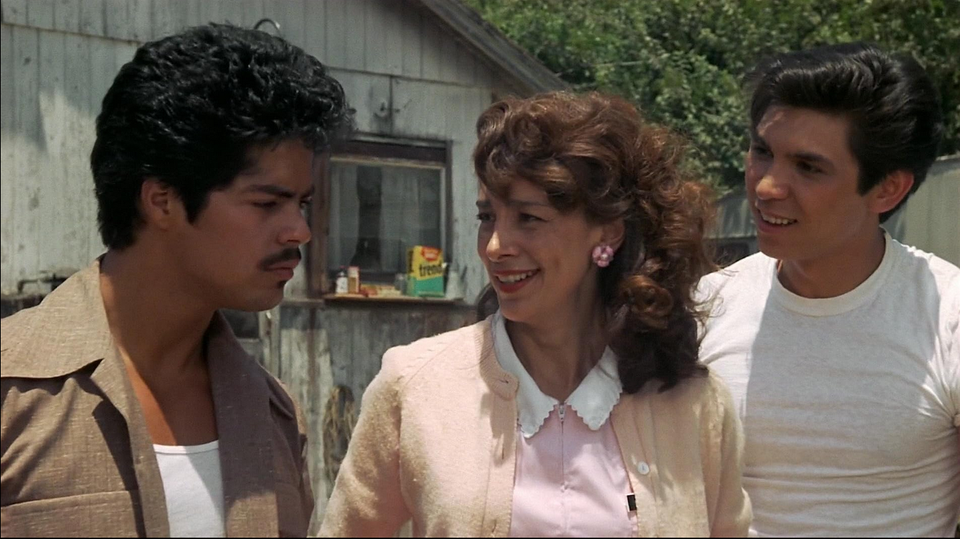
La Bamba is a biographical drama written and directed by Luis Valdez, who is often credited as the father of modern Chicano cinema and theater. The film depicts the life and career of Ritchie Valens AKA Richard Valenzuela, a young pioneer in the late 50s rock & roll scene and inspiration for many Chicano musicians to come, up to the point of his tragic plane crash in 1959. In particular, the film covers how Valen’s (portrayed by Lou Diamond Philips) life and career affected the lives of his family, notably that of his half-brother Roberto “Bob” Morales (portrayed by Esai Morales) and Valen’s girlfriend Donna Ludwig (portrayed by Danielle von Zerneck).
To begin with, I don’t think I can go over the positives in this film without first going over the soundtrack, it's fantastic. I really enjoy how the use of Santo & Johnny’s classic instrumental “Sleep Walk” compliments the slow motion sequences of the film’s opening and ending, ultimately bookending a tragic loss of a promising life cut short. Many of Ritchie Valens’ hits , including the titular “La Bamba” are played as the film goes over Ritchie’s music career. All of these songs are performed by the Mexican-American rock band, Los Lobos, with David Hidalgo’s vocals dubbed over scenes of Lou Diamond Philips as Ritchie performing. When looking up the production history of the film, I found that Los Lobos were personally requested by the surviving Valenzuela family to be involved in the picture and they even have a cameo appearance as the live entertainment at a Tijuana brothel in the film’s second act. I felt that Los Lobos did a great job and that’s not just because I’m particularly nostalgic for their version of “Come On, Let’s Go” (it’s on the soundtrack for the Cars (2006) movie game). The dubbing over Lou Diamond Philips is a little noticeable in the film’s earlier sequences, but to me it’s not a big deal and becomes less apparent as the film goes on. In addition, I also appreciate how the film brought on other artists to cameo as Ritchie Valens’ contemporaries during the performance sequences at the American Bandstand and the fated 1959 performance at Clear Lake, Iowa. I’ll give special note to Howard Huntsberry as Jackie Wilson singing “Lonely Teardrops” as well as Marshall Crenshaw as Buddy Holly performing “Crying, Waiting, Hoping”.
In addition, I feel that the performances across the board are pretty strong. Though my sensibilities today would have preferred a Chicano actor to play Valens, Lou Diamond Philips’ portrayal of the young rocker gets the pass in my book. As Valens, Philips comes across as charismatic and sincere when interacting with his on-screen family and loved ones. Moreover, despite the aforementioned vocal dubbing, Philips brings energy and a palpable fire in his screen presence during the live-performance sequences. In addition, Esai Morales as Valen’s half-brother Bob helps to depict a sibling relationship that in some ways reminds me of my own. Morales convincingly conveys the resentment, envy, and love Bob has towards his younger brother and his anguish over Ritchie’s death by the end of the film can be powerful, if unfortunately a little unintentionally funny by how the film abruptly plays up the dramatics in the last couple of minutes. The portrayed family dynamics and daily life in general, between Ritchie, Bob, their mother Connie (Rosanna DeSoto) and Bob’s abused girlfriend Rosie (Elizabeth Pena) are the effective emotional core of the film, so it's surprising that the film kinda breezes past their reactions to Ritchie’s death in quick scenes in the final minutes of the film’s runtime. The ending comes abruptly, which I suppose echoes how Valen’s life & career were cut short, but I feel that doing it in this way doesn’t leave the audience much time to feel the weight of the tragedy and how it affected those around Ritchie very well.
Overall, I’m going to give La Bamba a Best Movie Ever. I really enjoyed the film and there’s really not much more I can say about it other than just to go see it, if you can, and make your own takeaway from it. This movie has the vibe of something the teacher would’ve put on in high school Spanish class. I'm assuming it's the very brief sexual content in this film that probably prevented its exhibition in classrooms, but who’s to say. As for what comes next, I hope to watch Superman (2025) for the second time today, but my next post will probably be on the 1978 film starring Christopher Reeve. Have a good day!